You are not logged in.


Regenerative viticulture: the future for champagne
In early April, Drinks International visited champagne house Perrier-Jouët to learn about the work it’s been doing with regenerative viticulture. The Pernod Ricard house has consulted with wine expert and biologist Jamie Goode, who spoke to DI about the project.
Regenerative viticulture in a winemaking sense is the practice of encouraging a diversity of plants among a vineyard in order to generate soil health. Previously, winegrowers have encouraged a monocrop with the rationale being that it preserves maximum nutrients and provide more sunlight for the fruit. However, Goode insists the opposite is required.
“Plants release about 40% of the complex materials they produce into the soil. This sounds like a stupid thing to do, but this is important because it feeds the soil microbiology around them, essentially investing in their home and its surroundings,” says Goode.
Perrier-Jouët currently practices regenerative viticulture across 50% of its 65ha with plans to be fully integrated by 2030.
“If you go into an unfarmed woodland, it’s always abundant with life, and that’s the direction we’re trying to move towards in vineyards for two very good reasons,” adds Goode.
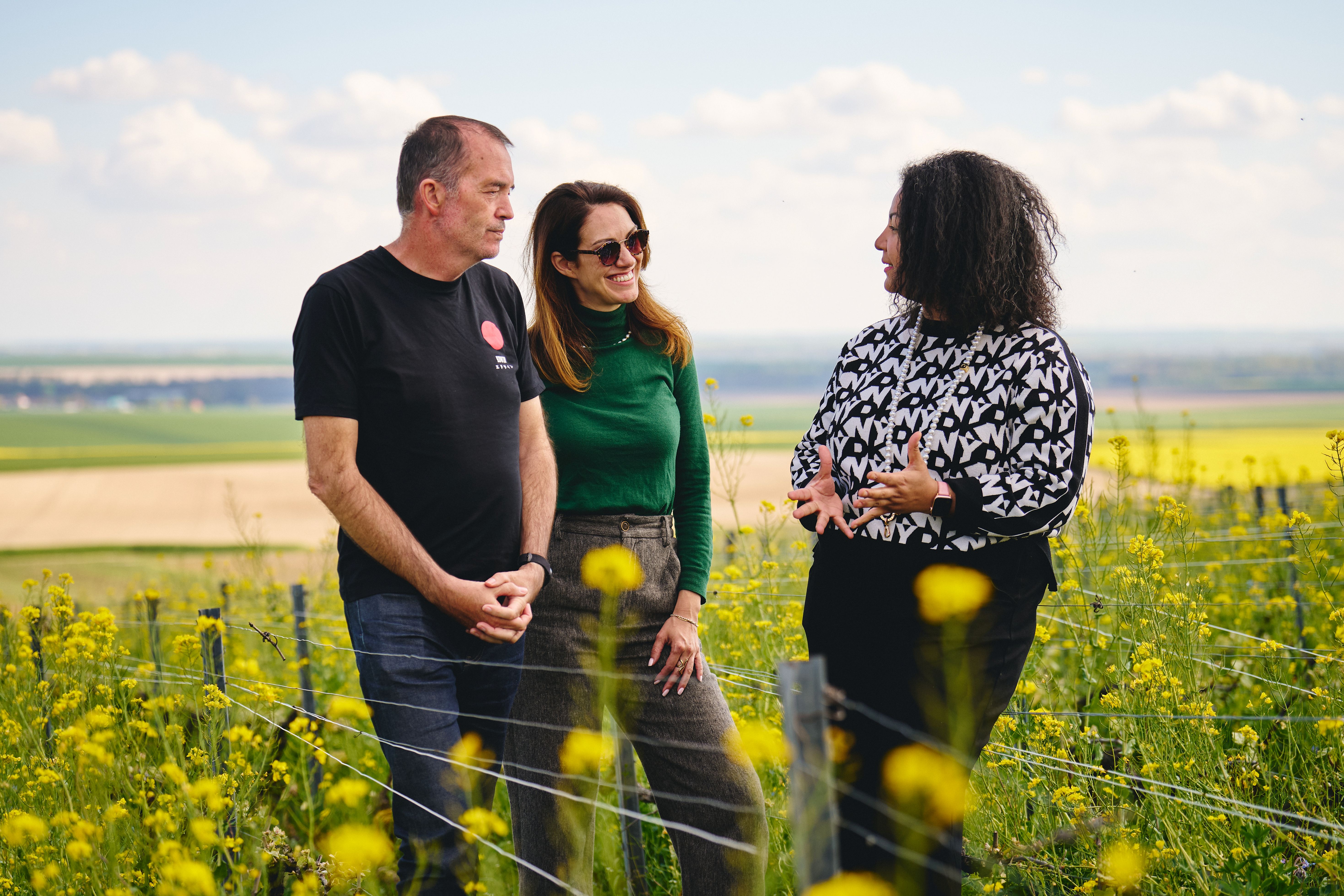
Goode pictured left
“The first of which is for ‘ecosystem services’, which is the ecosystem doing the jobs which otherwise would need to be carried out by us, such as fertilising. This costs money and time, but also the process of walking up and down the vineyard compacts the soil, which is what we want to avoid. Allowing a diversity of plants also increases rootage, which helps break up the soil. This in-turn increases nitrogen retention in the soil and allows roots to grow deeper.
“The other reason is to build resilience, especially with our changing climate. We have a warming trend but we also have significant fluctuations which we need resilience for. Cover crops (the plants growing among the vines) are also important because fruit needs a certain amount of protection. What’s interesting is if you look at the vineyards which have undergone regenerative viticulture, the cover crops have actually added to the vines rather than taken away. There are fluctuations, but the overall trend is an increase in yields. That’s why it’s exciting to see Perrier-Jouët taking the lead in regenerative viticulture.”
Perrier-Jouët is still in the testing phase of its regenerative viticulture journey. The brand is experimenting with different seed combinations and ratios in order to find the optimum recipe for its vines.
Goode adds: “With the majority of environmental projects the use of local crops is important. But these vines aren’t native to the region of Champagne and therefore its cover crops don’t need to be from the surrounding area because they have a specific role.
“There’s also evidence to suggest that a variety of cover crops is the best practice because they will have different rooting depths and allow for nitrogen fixing, which benefits all the plants sharing that soil.”
Perrier-Jouët has already been working on this project for around five years, with a further three required before the data is reliable.
“What we’re looking for is clear data,” adds Goode. “So we’re giving each section of the vineyard up to eight years with certain cover crops in order to determine the effects on yield and soil health and carbon retention. From there they can play around with the different results to achieve a desired combination.
“It’s so important to get this data set right because ultimately, there’s 30,000ha in Champagne and so there’s a lot of growers which need to be convinced that it works. If they can convince their partner growers that they’ll have fewer inputs and a better yield, then it’s a win-win.
“On top of that, there’s also an argument building that the process can improve the quality of the base wines.”
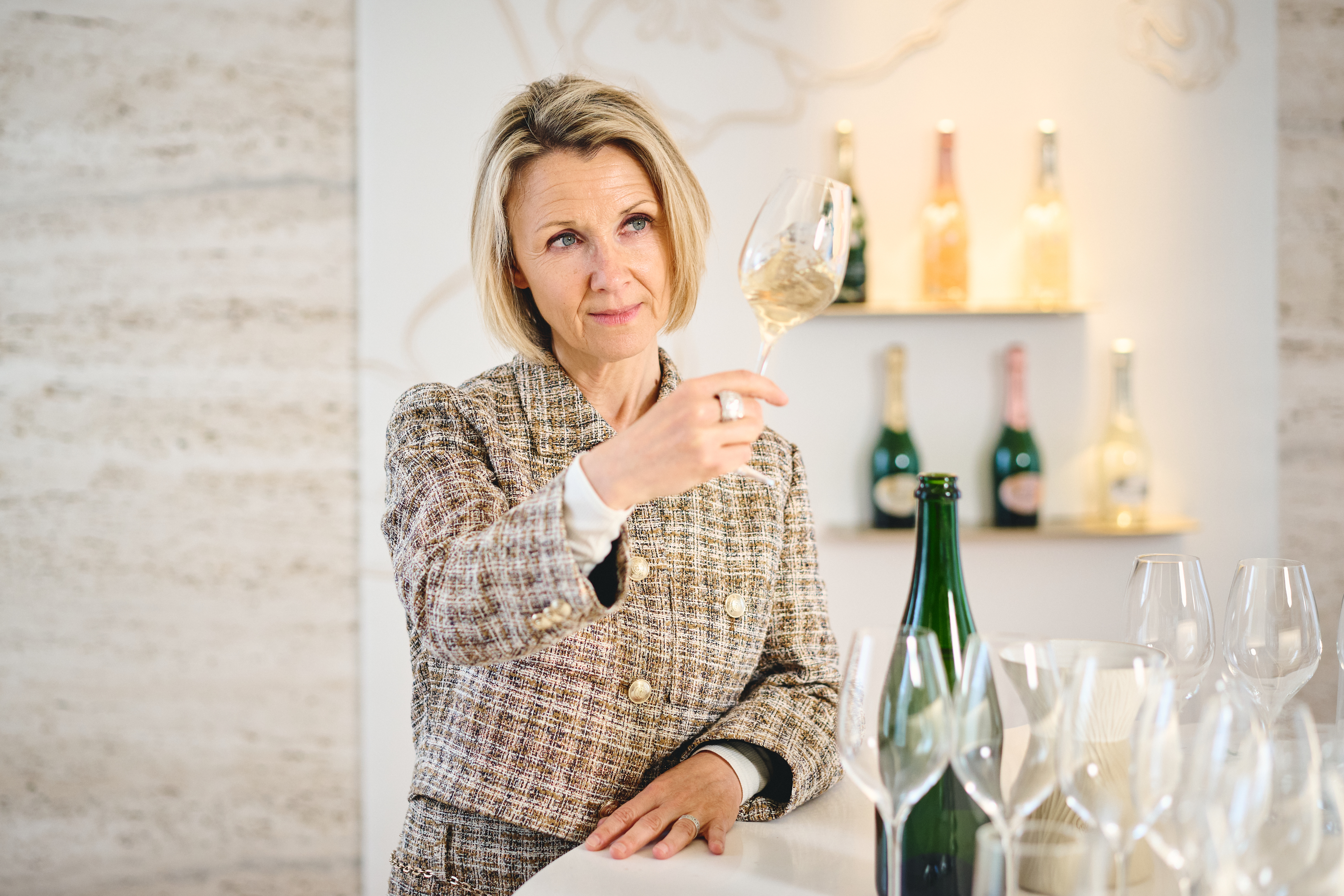
During a tasting of base wines made with both fruit from the older monocrop vines and plots undergoing regenerative viticulture, cellar master Séverine Frerson (pictured) was able to demonstrate different levels of acidity. Given the fairly primitive stage of regenerative viticulture at Perrier-Jouët, it’s difficult to say how the wines will benefit in the long term, but Frerson was able to showcase obvious changes in acidity between the same Chardonnay grapes from the same plots, but with the different farming practices.
It’s still early stages, but using regenerative viticulture has the potential to provide a greater, more resilient yield which requires less labour and reduced investment. If it can also provide equally quality wines, if not better, then it could be the key to champagne’s future among growing consumer demand and climate change pressures.
Related articles:
